Flagstaff, Arizona · A Dark Sky City

Meridian Planetarium

The universe, nightly.

Dome shows under a 52-foot star theater, public telescope nights at 7,000 feet, and some of the darkest municipal skies in the country. Bring the kids. Bring a jacket. The photons have traveled a long way to meet you.

In the Dome

Now Showing

Three shows in rotation this season, each produced for our full-dome projection system. Doors close at showtime and the theater goes properly dark, so arrive ten minutes early.

38 min Ages 8+

Ghost Light: The Life of Dying Stars

A star's final act can outshine an entire galaxy. Follow a red giant through its last million years, from swelling shell to planetary nebula, narrated with more calm than the subject deserves.

Sat 2:00p Fri 7:00p Sat 7:00p Sun 6:00p
25 min All ages

Moonwalkers of Coconino

Before Apollo astronauts walked on the Moon, they trained in the volcanic fields outside Flagstaff. A local history of lunar rehearsals, told for families, with plenty of crater-hopping.

Sat 11:00a Sat 1:00p Sun 1:00p Sun 4:00p
42 min Ages 10+

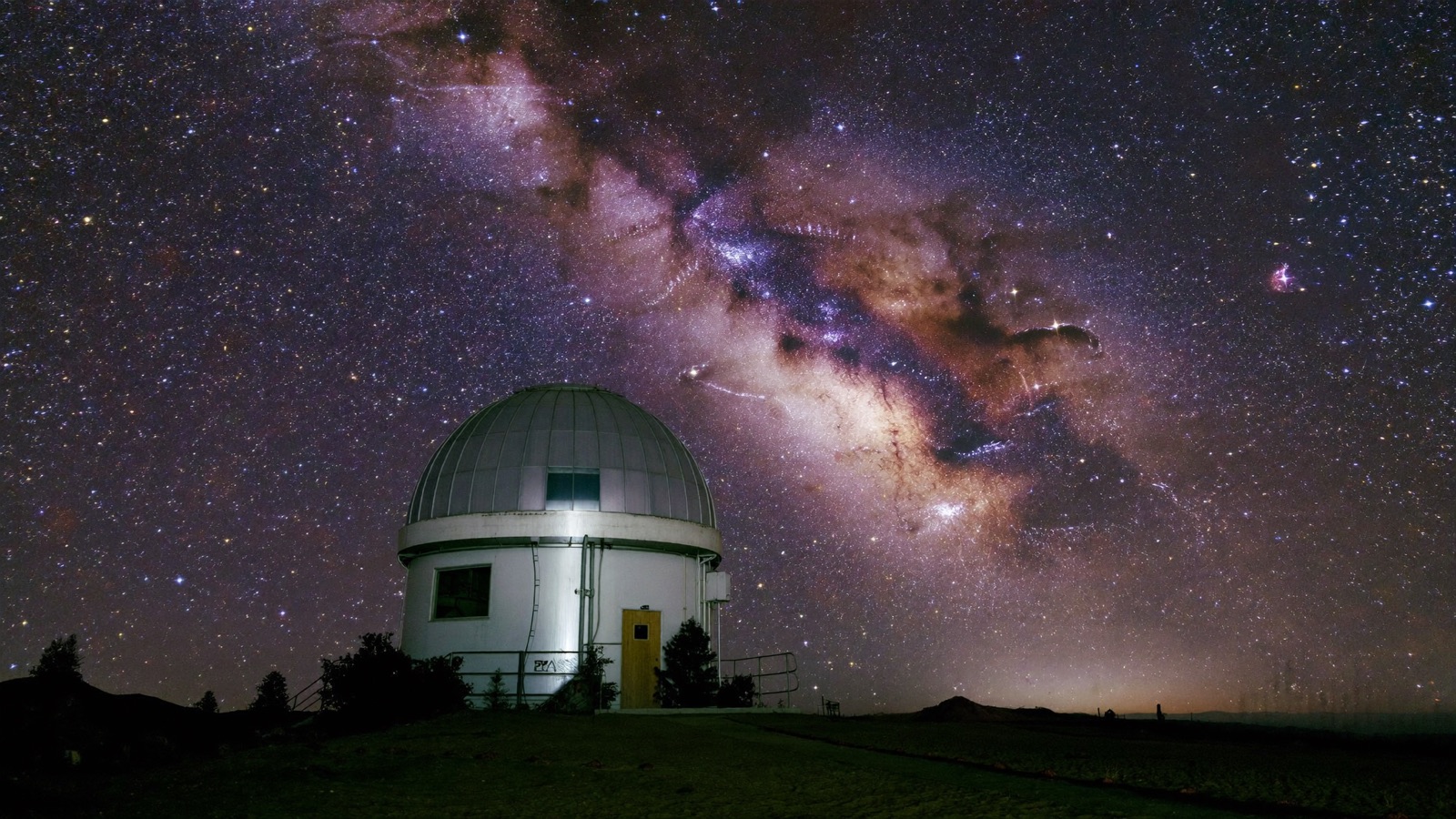
The River Overhead: Reading the Milky Way

Cultures across the world saw a river, a road, or spilled milk. We fly through the actual structure: spiral arms, the galactic core, and our own quiet address in the Orion Spur.

Sat 4:00p Fri 8:15p Sat 8:15p

Interactive Sky Map

Tonight's Sky

A simplified view of the southern sky over Flagstaff after dusk this week. Select any object on the dome to see when it rises and how to find it. On telescope nights, our volunteers will point you at all six.

SE S SW Jupiter Saturn The Moon Vega Andromeda ISS Pass

Southern sky, about 9:30 PM this week. Not to scale, but close enough to point with.

Tonight's Sky

Pick an object

Click or tab to any of the six highlighted objects on the dome. You'll get its rise time over the San Francisco Peaks and one honest tip from our telescope volunteers.

General tip: give your eyes 20 minutes away from phone screens and everything on this map gets dramatically better.

On the Observing Deck

Telescope Nights

Free with evening admission, weather permitting. Our 16-inch reflector and a small fleet of volunteer scopes set up on the north deck. We schedule around the Moon: the darker the sky, the deeper we can look.

August 2026 Schedule
Date Moon Phase Featured Targets Deck Opens
Sat, Aug 1
Waxing gibbous
Lunar terminator craters, Saturn at dusk 8:30 PM
Fri, Aug 7
Full moon
Full Moon night: rays, maria, and moon-illusion talk 8:30 PM
Sat, Aug 15
Last quarter
Jupiter's moons, Albireo double star 8:15 PM
Fri, Aug 21
Waning crescent
Milky Way core, Lagoon Nebula 8:15 PM
Sat, Aug 22
New moon
Dark-sky night: Andromeda Galaxy, Ring Nebula 8:15 PM
Fri, Aug 28
Waxing crescent
Crescent Moon earthshine, Hercules Cluster 8:00 PM
Sat, Aug 29
First quarter
Best lunar shadows of the month, Vega and Lyra 8:00 PM

Cloudy night? We move indoors for a live sky tour in the dome instead. Check the recorded status line at (928) 555-0180 after 5 PM, or trust the Flagstaff odds: about 280 clear nights a year.

Plan Your Night

Visit

We sit at the edge of town at 7,050 feet, ten minutes from downtown Flagstaff. Summer evenings run about 20 degrees cooler than Phoenix. Locals will tell you that's the whole point.

Hours

Wed – Thu
1:00 PM to 9:00 PM
Fri – Sat
10:00 AM to 10:30 PM
Sunday
12:00 PM to 8:00 PM
Mon – Tue
Closed (staff stargazing)

Find Us

Meridian Planetarium
4180 Zenith Ridge Road
Flagstaff, AZ 86001

(928) 555-0142
hello@meridianplanetarium.org

Free parking. The lot lights are red and dim on purpose.

Admission

  • Adult$14
  • Child (4 to 12)$8
  • Under 4Free
  • MembersAlways free
  • Telescope night add-onIncluded

Dark-Sky Etiquette

Flagstaff was the world's first International Dark Sky City, and we keep it that way on the deck. Please switch phones to red-light mode or keep them pocketed during telescope sessions, use the red flashlights we hand out at the door, and let the docent's laser do the pointing. Your night vision takes about 20 minutes to build and one screen glance to lose.

For Young Astronomers

Field Notes

Three things worth knowing before you look up. Collected from our school programs, where the best questions come from.

Starlight is old mail

The light from Vega left the star about 25 years ago. When you spot it tonight, you're reading a letter written before you were tall enough for the telescope eyepiece. Some galaxies send mail that's millions of years old.

Stars don't actually twinkle

The wobble happens in the last 60 miles, as starlight bounces through Earth's moving air. Planets shine steadier because they're tiny disks, not points. That's an old trick for telling them apart with just your eyes.

You can hold out a ruler

Your fist at arm's length covers about 10 degrees of sky, and a pinky finger covers 1 degree, which is two full Moons. Astronomers use this trick constantly. Nobody looks silly doing it on our deck. Everyone is doing it.